
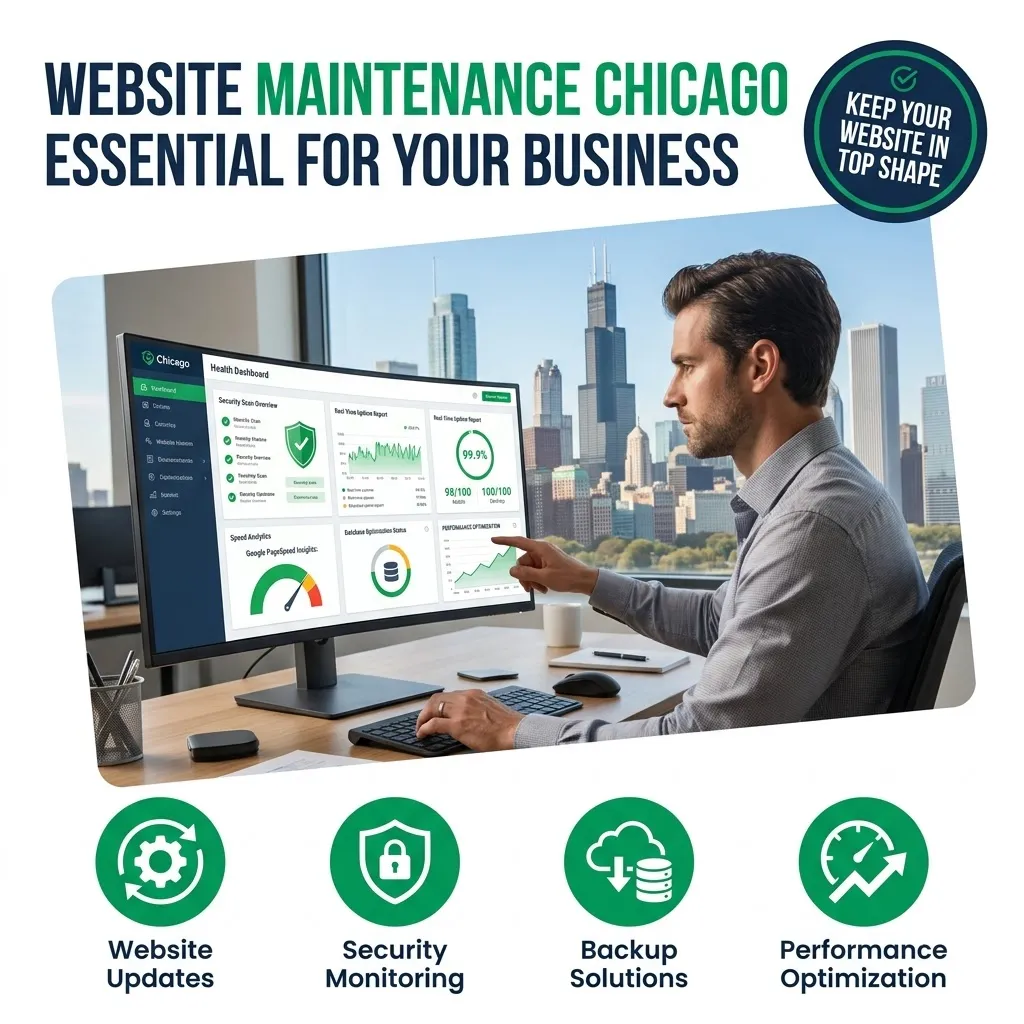
website maintenance chicago
For any Chicago business with a website, maintenance isn’t optional — it’s a core part of sustaining traffic, trust, and revenue When a site lags behind, loads slowly, or drops offline, local customers move on The problem isn’t only technical; it’s practical A neglected site means lost leads, skipped updates to local offers, and a weakened online presence compared to nearby competitors who stay on top of their digital systems
Problem frames the rest of this guide: a website sits at the intersection of technology, user experience, and search visibility If you operate in Chicago, the market is crowded, and local users expect fast, secure, accessible experiences That’s why a thoughtful approach to website maintenance chicago matters—and it’s why you should implement a clear plan rather than patching issues as they appear
Its a common problem, and many business owners feel overwhelmed The good news is that you can set up a practical maintenance routine that protects uptime, improves performance, and supports steady growth without turning into a full-time tech project
Key components of a robust website maintenance plan
A strong maintenance plan covers several essential areas Properly coordinating these elements reduces risk, extends your site’s lifespan, and keeps you aligned with customer expectations and search engine guidelines Below are the core pillars of an effective approach to website maintenance chicago
website maintenance chicago: a local approach to reliability
Install patches for your content management system (CMS), plugins, and themes as soon as they’re released Regular, tested backups are your safety net for ransomware and data loss Track site availability in real time and have a documented response plan to restore service quickly after outages Optimize images, enable caching, use a content delivery network (CDN), and minimize render-blocking resources to keep pages fast for local visitors and mobile users Refresh key pages, fix broken links, update metadata, and ensure structured data remains accurate to sustain search visibility Maintain WCAG accessibility standards so users with disabilities can engage with your site, which also helps with search rankings and legal risk mitigation Maintain tested recovery procedures and clear rollback options in case of a bad update or data loss Use a staging environment for major updates and perform cross-device checks (desktop, tablet, mobile) to preserve user experience
When these components work in harmony, you reduce the chance of nasty surprises and create a smoother, more reliable experience for Chicago-based users who expect fast, clean, and accessible websites This consistency is what keeps search engines happy and visitors coming back
Implementation steps for a practical maintenance routine
Turning the components into a living practice requires a clear plan Here’s a practical, action-oriented approach you can adapt to your business size, platform, and Chicago market
Catalogue plugins, themes, versions, security settings, and backup schedules Note what’s outdated, what works, and what could be cleaned up to reduce risk and improve performance Decide who does what and how often If you have a team, assign ownership; if you work with an agency, set expectations up front with a clear scope Schedule updates, backups, speed optimizations, content refreshes, and accessibility checks A predictable cadence helps you stay ahead of issues Pick monitoring, backup, deployment, and testing tools that fit your platform and budget The right tools make ongoing maintenance scalable Define what “good” looks like for load times, uptime, and critical errors Track improvements over time to justify ongoing investment Start with critical fixes (security patches, backups, uptime), then move to performance and content updates This minimizes risk while delivering fast wins Reassess your plan against changes in technology, user behavior, and the Chicago market Update you processes and tools as needed
This approach helps you stay proactive rather than reactive It also makes it easier to justify ongoing maintenance to leadership or stakeholders who want tangible outcomes This approach save time and money
Choosing a partner or doing it in-house
Deciding whether to manage website maintenance chicago in-house or hire a local partner depends on your resources, platform, and goals Both paths have benefits, and in many cases a blended approach works best Here’s how to decide and what to look for if you choose a partner
Ensure the team understands your CMS (WordPress, Shopify, Drupal, or another system) and any custom integrations you rely on A Chicago-based partner can offer easier quick-turnaround support and align with local business hours and expectations, but remote options can also be reliable Prioritize clear communication and responsiveness regardless of location Look for a written scope, service levels, emergency response times, and predictable pricing to avoid disputes later Ask about their approach to encryption, access control, vulnerability scanning, and disaster recovery testing Seek case studies or referrals that demonstrate improved uptime, faster load times, and stable SEO results for similar sites Favor providers who offer transparent, itemized pricing and clear what’s included (and what isn’t) in maintenance plans
Whether you hire someone in Chicago or contract with a national firm, the goal is the same: ensure consistent performance, security, and optimization with regular, predictable effort A good partner will become an extension of your team, not just a vendor, helping you adapt to local user expectations and competitive dynamics
FAQ
What is included in website maintenance chicago?
Typical maintenance covers security updates, backups, uptime monitoring, performance optimization, content updates, SEO checks, accessibility checks, and testing in a staging environment before deploying changes
How often should I update my website in Chicago?
Update frequency depends on your platform and risk level Security patches and critical fixes should be applied as soon as they’re available, while content updates and SEO reviews are often done monthly A regular, scheduled cadence helps you stay ahead of issues
Can I maintain my website myself or should I hire a service in Chicago?
Small sites with limited changes can be managed in-house, especially if you have someone comfortable with updates and backups For most businesses, especially those with complex sites or limited internal resources, a maintenance service provides reliability, security, and scalability that are hard to achieve alone
What are common security risks for Chicago businesses?
Common risks include outdated software and plugins, weak passwords, misconfigured permissions, and unmonitored login attempts Regular patches, strong authentication, backup testing, and ongoing monitoring reduce these risks significantly
How much does website maintenance chicago typically cost?
Costs vary by site complexity, platform, and service level Basic ongoing maintenance can be a few hundred dollars per month for smaller sites, while larger or highly dynamic sites with advanced security and performance needs will be higher It’s best to compare quotes that clearly detail what’s included and how often updates occur
Closing note: maintaining a website in a bustling city like Chicago isn’t a luxury; it’s a practical, ongoing discipline When you treat maintenance as a monthly operation rather than a reactive task, you protect your brand, improve user experience, and support sustainable growth in a competitive local market